Backup Power for Commercial Sites: Generators, UPS and Batteries Compared
 Amir Oboudi·November 5, 2026·6 min read
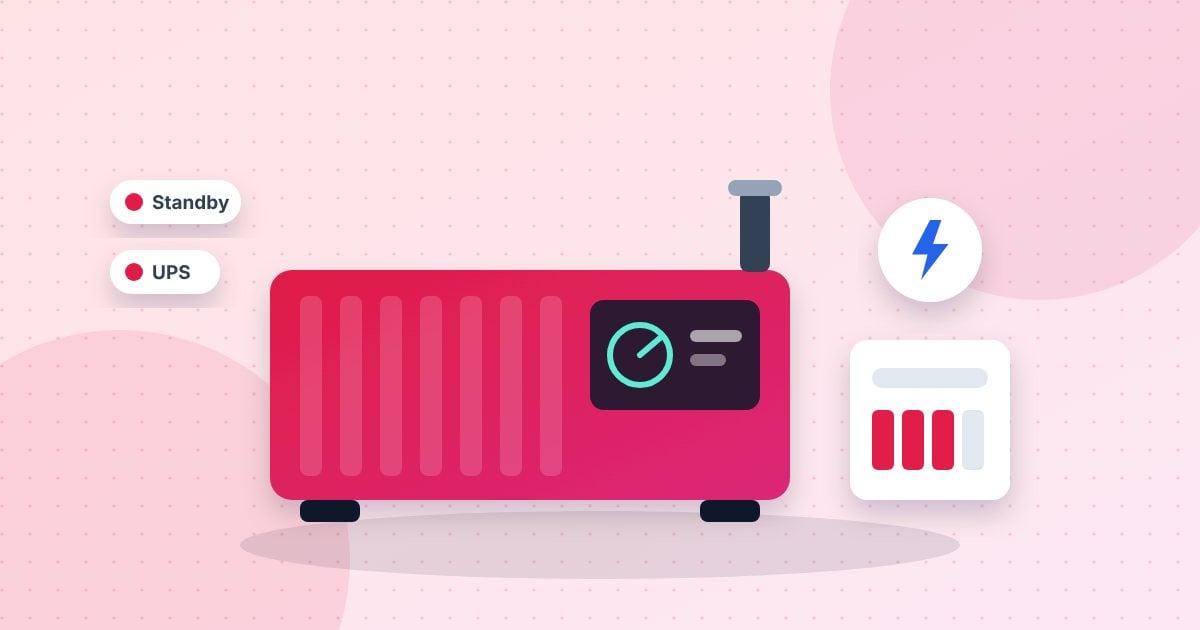
Generators, UPS units and batteries solve different parts of the backup problem. Here is how they compare and how to combine them for a commercial site.
In this article
What is the best backup power for a commercial site?
There is no single best option. A UPS bridges the first seconds or minutes of an outage and protects sensitive equipment, a standby generator provides long runtime, and a battery storage system can cover critical loads quietly and, if sized for it, shift energy daily. Many sites combine two of them.
How they compare
| UPS | Standby generator | Battery storage | |
|---|---|---|---|
| Response | Immediate | Starts within seconds, with a transfer switch | Fast, depends on the system design |
| Runtime | Minutes | Hours to days with fuel | Hours, limited by capacity |
| Best for | IT, controls, ride-through | Long outages, large loads | Critical loads, daily use, solar pairing |
| Considerations | Battery replacement cycles | Fuel, emissions, noise, maintenance | Capacity cost, permits |
Start with your critical loads
List the equipment that must keep running, its power in kW or kVA and the runtime you need. Separate loads that need no interruption from those that can wait a few seconds for a generator to start.
Sizing a generator
Add up the running load, then account for the starting current of motors and other surge loads, and leave margin for growth. Ask the supplier for the rated output at your altitude and temperature, the fuel type and the transfer switch needed.
Where batteries fit
Battery storage can cover critical loads without fuel or noise and can work every day to reduce peaks. See storage trends for commercial buyers and how to compare battery prices.
Questions for suppliers
- What are the rated and continuous outputs, and at what conditions?
- What certifications does the equipment hold? See certifications.
- What is included: transfer switch, enclosure, controls, commissioning?
- What are the maintenance needs and service locations?
- What is the lead time?
Find equipment
Browse generators, UPS and storage in the shop and B2B listings, including in-stock and surplus equipment, or ask suppliers for quotes with an RFQ. For used units, follow the used equipment checklist.
Frequently Asked Questions
Do I need both a UPS and a generator?
Often yes for critical IT. The UPS covers the gap until the generator is running.
How long can a generator run?
As long as it has fuel and maintenance, within the manufacturer's limits.
Can batteries replace a generator?
For short outages and critical loads, sometimes. For long outages, a generator or larger storage is usually needed.
What is an automatic transfer switch?
A switch that moves your site from grid power to backup power automatically when the grid fails.
How should I size backup power?
List critical loads and runtime, include starting currents and growth, and have a designer confirm.
Written by
Amir Oboudi
November 5, 2026
Related Articles
View all
How to Sell Energy Equipment on TradYard: A Supplier's Guide to Listings, Documents and Deals
Factories, distributors and surplus sellers can reach buyers on TradYard. Here is how to apply, build a listing buyers trust, host a live factory tour and handle quotes and deals.

How Surplus and Used Energy Equipment Auctions Work: A Buyer's Guide
Auctions can put surplus and used energy equipment in reach at a lower price, but only if you read the lot, set a limit and plan freight. Here is the process, step by step.
Commercial EV Charging Equipment: AC vs DC Fast Chargers, a Buyer's Guide
Level 2 AC chargers and DC fast chargers suit very different sites. This guide covers power levels, connectors, software and what to ask before you buy charging equipment in bulk.
Stay in the Loop
Get weekly market insights, auction alerts, and expert tips delivered to your inbox.
Unsubscribe anytime. No spam.