Microgrids for Industrial Sites: Components, Use Cases and How to Procure Them
 Amir Oboudi·September 21, 2026·6 min read
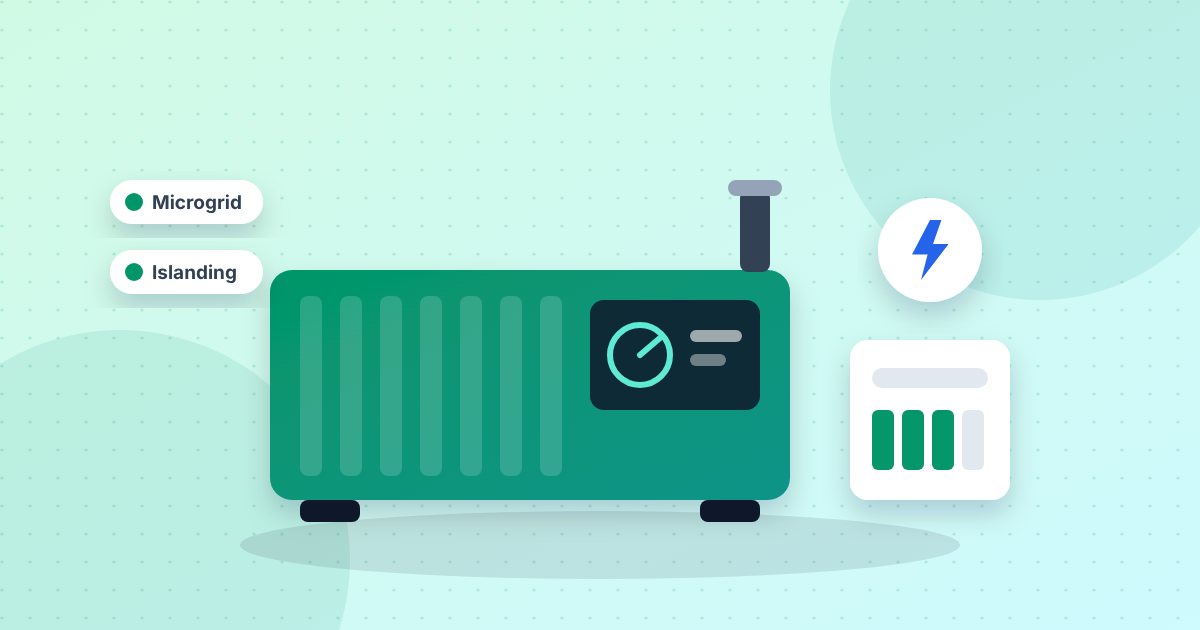
A microgrid lets a site generate, store and control its own power, and keep running when the main grid fails. Here are the building blocks and how to buy them.
In this article
What is a microgrid?
A microgrid is a local electrical system that can operate connected to the main grid or on its own (islanded). It combines generation, usually solar and sometimes a generator, with storage, switchgear and a controller that balances supply and demand. Industrial sites, remote communities, mines, campuses and critical facilities use microgrids to improve reliability and reduce fuel or energy costs.
The building blocks
- Generation: solar, standby or prime generators and, in some locations, wind or other sources. See diesel vs natural gas generators.
- Storage: batteries that smooth supply, ride through transitions and shift energy. See battery sizing.
- Power conversion: inverters or a PCS that can form a stable grid when islanded. See PCS vs hybrid inverter.
- Switchgear and protection: breakers, relays and a point of common coupling to the utility. See breakers and protection.
- Transformers: to match voltages across the system. See buying a transformer.
- Controller: the software and hardware that decide what runs when, and manage the transition to and from island mode.
Where microgrids make sense
- Sites where outages are very costly.
- Remote sites that rely on expensive fuel.
- Facilities with large demand charges that storage and solar can reduce.
- Locations where the utility connection is limited.
Procurement approach
Microgrids are integration projects. Define the critical loads, the runtime and the operating modes first. Decide whether to buy components separately, with your own integrator, or as a packaged solution from one supplier who takes responsibility for the whole. Whichever you choose, put compatibility, testing and commissioning in the contract. See the key clauses in a supply agreement.
Approvals
You will need utility interconnection approval and, in most places, electrical and fire approvals. Start talks with the utility and authority at the design stage.
Find the equipment
Browse generators, storage, inverters and switchgear in the shop and B2B listings, or describe the whole package in an RFQ.
Frequently Asked Questions
What does islanding mean?
Operating the local system separately from the main grid.
Do microgrids need batteries?
Usually, because batteries stabilise the system and bridge transitions. Some very simple designs use only generators.
Can I add a microgrid to an existing site?
Often yes, by adding storage, generation and a controller to existing switchgear, subject to design review.
What is a point of common coupling?
The connection point between the microgrid and the utility grid.
Who is responsible for performance?
Define this in the contract. A single integrator can take responsibility for the system as a whole.
Written by
Amir Oboudi
September 21, 2026
Related Articles
View all
How to Sell Energy Equipment on TradYard: A Supplier's Guide to Listings, Documents and Deals
Factories, distributors and surplus sellers can reach buyers on TradYard. Here is how to apply, build a listing buyers trust, host a live factory tour and handle quotes and deals.

How Surplus and Used Energy Equipment Auctions Work: A Buyer's Guide
Auctions can put surplus and used energy equipment in reach at a lower price, but only if you read the lot, set a limit and plan freight. Here is the process, step by step.
Backup Power for Commercial Sites: Generators, UPS and Batteries Compared
Generators, UPS units and batteries solve different parts of the backup problem. Here is how they compare and how to combine them for a commercial site.
Stay in the Loop
Get weekly market insights, auction alerts, and expert tips delivered to your inbox.
Unsubscribe anytime. No spam.