Solar Plus Storage for Commercial Sites: How the Equipment Fits Together
 Amir Oboudi·September 30, 2026·6 min read
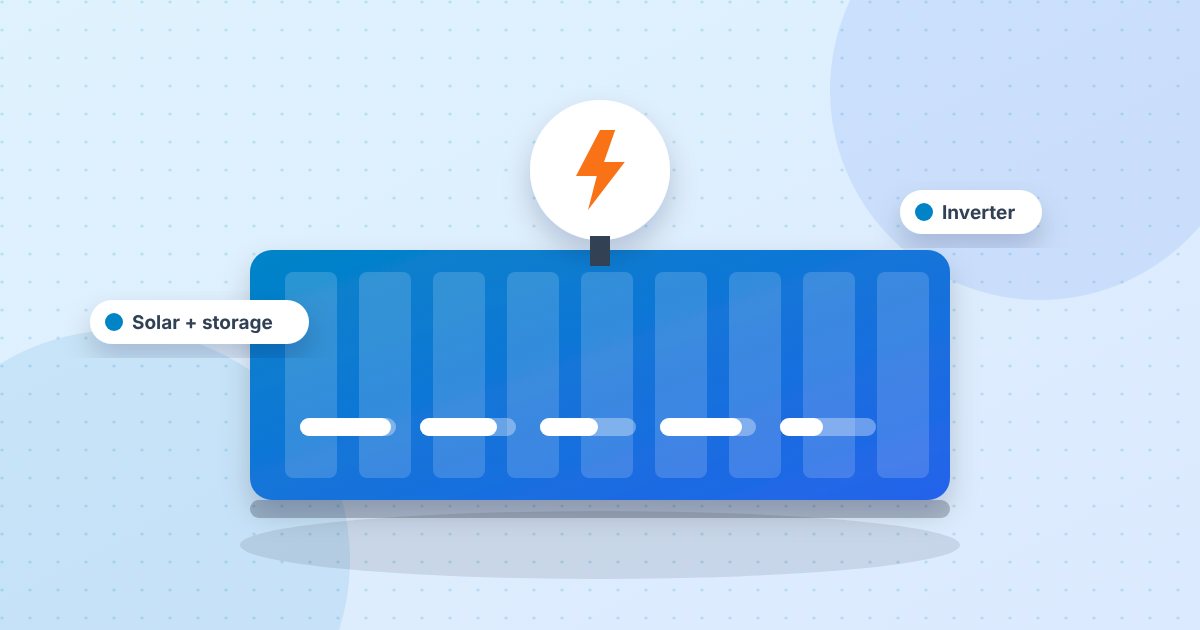
Solar-plus-storage is a system, not a shopping list. See how the main components connect, the difference between DC and AC coupling, and what to specify.
In this article
How does a commercial solar-plus-storage system work?
Solar modules produce DC power that inverters convert to AC for the site. A battery stores surplus energy and releases it later, through either the same inverter (DC coupling) or its own converter (AC coupling). A controller decides when to charge and discharge, and protective switchgear connects everything to the site and the utility.
The main components
- Modules and racking: see buying panels in bulk and racking.
- Inverters: string, hybrid or central. See inverter types.
- Battery system: sized for your goals. See sizing.
- Power conversion: a PCS or hybrid inverter. See PCS vs hybrid.
- Controller or energy management system: sets the charging and discharging logic.
- Protection, metering and switchgear: see breakers and protection.
- Balance of system: see the BOS checklist.
DC-coupled vs AC-coupled
| DC-coupled | AC-coupled | |
|---|---|---|
| How | Battery shares the DC bus and inverter with the panels | Battery has its own converter on the AC side |
| Strengths | Efficient charging from solar, fewer conversion steps | Easy to add to an existing solar system, flexible placement |
| Watch for | Inverter and battery must be matched | Extra conversion losses, more equipment |
What the controller should do
Depending on your goals, the controller can store midday solar for the evening, cut demand peaks, follow time-of-use rates, or hold reserve energy for backup. Clarify the logic you need in your specification, and who maintains the software.
Specify the interfaces
Most failures in integrated systems are at interfaces: communication between battery and inverter, protection settings, and utility interconnection. Ask the supplier to confirm compatibility in writing and provide commissioning support. See key clauses in a supply agreement.
Get comparable quotes
Describe your system and goals in an RFQ and see how to write one. Browse components in the shop and B2B listings.
Frequently Asked Questions
Can I add a battery to an existing solar system?
Yes, often with an AC-coupled battery. Check inverter compatibility and utility rules.
Which is more efficient, DC or AC coupling?
DC coupling usually has fewer conversion steps, but system design and use case matter.
Do I need an energy management system?
For anything beyond basic self-consumption, a controller helps meet your goals.
Does storage need separate approvals?
Often yes. Check utility interconnection and fire and electrical rules.
Who should integrate the system?
An experienced integrator or a supplier that takes responsibility for the full system.
Written by
Amir Oboudi
September 30, 2026
Related Articles
View all
How to Sell Energy Equipment on TradYard: A Supplier's Guide to Listings, Documents and Deals
Factories, distributors and surplus sellers can reach buyers on TradYard. Here is how to apply, build a listing buyers trust, host a live factory tour and handle quotes and deals.

How Surplus and Used Energy Equipment Auctions Work: A Buyer's Guide
Auctions can put surplus and used energy equipment in reach at a lower price, but only if you read the lot, set a limit and plan freight. Here is the process, step by step.
Backup Power for Commercial Sites: Generators, UPS and Batteries Compared
Generators, UPS units and batteries solve different parts of the backup problem. Here is how they compare and how to combine them for a commercial site.
Stay in the Loop
Get weekly market insights, auction alerts, and expert tips delivered to your inbox.
Unsubscribe anytime. No spam.