Solar Racking and Mounting Equipment: A Buyer's Guide for Roof, Ground and Carport Projects
 Amir Oboudi·September 16, 2026·6 min read
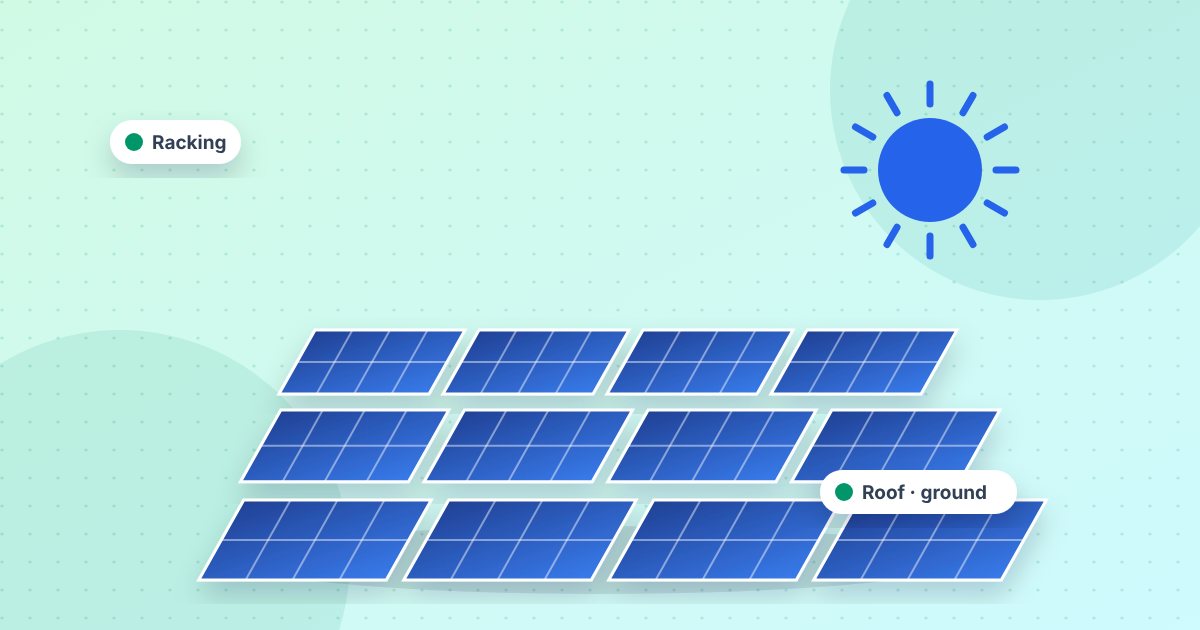
Racking holds your panels for 25 years or more in wind and snow. This guide covers the main mounting types, the loads that decide the design and the documents to ask for.
In this article
How do you choose solar racking?
Choose racking from the site outward: the structure it sits on (roof type or ground conditions), the local wind and snow loads, the module size and the tilt and orientation you want. The best system for a flat commercial roof is not the best for a ground-mounted plant or a carport, so start with a structural review and ask suppliers for load calculations, not just a price.
Main mounting types
- Pitched roof rails: rails attached to rafters or purlins with flashed attachments. Common on sloped roofs.
- Flat roof ballasted systems: weighted frames that avoid roof penetrations but add load to the roof. Roof capacity decides if this works.
- Flat roof attached systems: fixed to the structure, lower weight but with penetrations that must be sealed.
- Ground mount: driven piles, ground screws or concrete footings carrying fixed or tracking structures.
- Carports: larger structures that double as shade and are engineered like a building.
Loads decide the design
In Canada, snow load and wind load drive the structural design more than in many other markets. Ask a qualified engineer to confirm the loads for your location, and ask the supplier to show the system has been designed or tested for them. Do not accept a generic statement.
Materials and corrosion
Racking is usually aluminum or galvanized steel. Aluminum resists corrosion and is light, steel is strong and often cheaper for large ground-mount structures. Check coatings and fasteners for the environment, especially near coasts or where road salt is used, and ask about the warranty on the finish.
Compatibility with the modules
Confirm that clamps fit the module frame thickness, that the module manufacturer approves the clamping zones and that the system works with the module size and weight. Bifacial modules need racking that limits shading on the rear side. See bifacial modules.
Documents to request
- Datasheet and installation manual.
- Structural calculations or engineering letters for your loads.
- Material certificates and coating specifications.
- Applicable certifications and test reports. See which documents to ask for.
- Warranty terms and a bill of materials with part counts.
Do not forget the shipping
Racking is bulky and heavy, and one missing part can stall installation. Check the packing list against the bill of materials on delivery. See freight planning, and the wider balance-of-system list in the BOS equipment checklist.
Frequently Asked Questions
What is ballast?
Weight, often concrete blocks, that holds a flat-roof system in place without fastening it to the roof.
Is aluminum or steel racking better?
It depends on the project. Aluminum is light and corrosion resistant, steel is strong and economical for large structures.
Do I need an engineer for racking?
For most commercial projects, yes. Roof and ground conditions and local loads need a qualified review.
Can racking be bought separately from panels?
Yes, and often is. Make sure it is compatible with the module you chose.
How do I compare racking prices?
Compare price per watt of installed capacity, including all parts, and not just the price of rails.
Written by
Amir Oboudi
September 16, 2026
Related Articles
View all
How to Sell Energy Equipment on TradYard: A Supplier's Guide to Listings, Documents and Deals
Factories, distributors and surplus sellers can reach buyers on TradYard. Here is how to apply, build a listing buyers trust, host a live factory tour and handle quotes and deals.

How Surplus and Used Energy Equipment Auctions Work: A Buyer's Guide
Auctions can put surplus and used energy equipment in reach at a lower price, but only if you read the lot, set a limit and plan freight. Here is the process, step by step.
Backup Power for Commercial Sites: Generators, UPS and Batteries Compared
Generators, UPS units and batteries solve different parts of the backup problem. Here is how they compare and how to combine them for a commercial site.
Stay in the Loop
Get weekly market insights, auction alerts, and expert tips delivered to your inbox.
Unsubscribe anytime. No spam.