Transformer Efficiency and Losses: Why Total Cost of Ownership Beats Purchase Price
 Amir Oboudi·September 24, 2026·6 min read
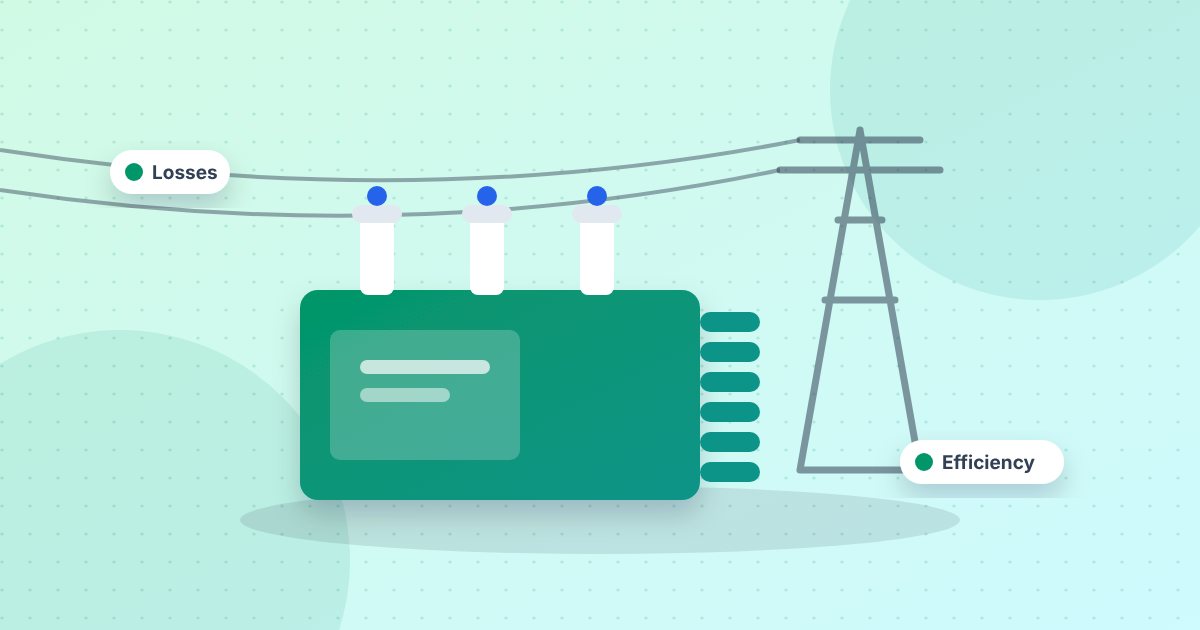
A transformer runs for decades, so the energy it wastes can cost more than the unit itself. Here is how to compare losses and calculate total cost of ownership.
In this article
Why do transformer losses matter?
Every transformer wastes a small share of the energy that passes through it as heat. Because transformers run continuously for decades, that wasted energy can add up to more than the purchase price. Comparing offers on losses and total cost of ownership, not only on price, often leads to a better choice.
The two kinds of loss
- No-load loss (core loss): energy used to magnetise the core whenever the transformer is energised, regardless of load. It runs 24 hours a day, every day.
- Load loss (winding loss): energy lost as heat in the windings, which rises with the square of the load current.
A transformer lightly loaded most of the time is dominated by no-load loss. A heavily loaded one is dominated by load loss. Your load profile tells you which matters more.
Efficiency standards
Efficiency rules for distribution transformers exist in Canada and the United States and are updated from time to time. Ask the supplier which rule or standard the unit meets and request the test values for the specific unit. See how to buy a transformer.
Total cost of ownership, step by step
- Get the guaranteed no-load and load losses in watts or kW from each supplier.
- Estimate your average load and operating hours.
- Calculate yearly energy lost: no-load loss times hours, plus load loss times the load factor squared times hours.
- Multiply by your electricity price, and over the expected life, using a discount rate your finance team accepts.
- Add this to the purchase price and compare.
A more efficient unit with a higher price can win clearly when electricity costs are high or the transformer carries a steady load, such as at a solar plant or a factory.
Other cost factors
- Installation, pad and cabling costs.
- Maintenance, for example oil testing on liquid-filled units.
- Spare parts and service availability.
- Lead time, because delay costs money. See lead times.
Used units
Older transformers often have higher losses. A used unit can still make sense for backup or a short project, but include its running cost in the comparison. See the used equipment checklist.
Use the RFQ form and ask suppliers to state guaranteed losses with their price, or compare listings in the shop and B2B listings.
Frequently Asked Questions
What is the difference between no-load and load loss?
No-load loss is constant while energised. Load loss varies with the load squared.
Is a more efficient transformer worth the extra cost?
Often yes over its life, especially with steady loads and high electricity prices. Calculate it.
Where do I find loss values?
In the datasheet and the factory test report. Ask for guaranteed values in the offer.
Do losses affect cooling needs?
Yes. Losses become heat, so higher losses mean more heat to remove.
What is total cost of ownership?
The purchase price plus the discounted cost of running, maintaining and installing the equipment over its life.
Written by
Amir Oboudi
September 24, 2026
Related Articles
View all
How to Sell Energy Equipment on TradYard: A Supplier's Guide to Listings, Documents and Deals
Factories, distributors and surplus sellers can reach buyers on TradYard. Here is how to apply, build a listing buyers trust, host a live factory tour and handle quotes and deals.

How Surplus and Used Energy Equipment Auctions Work: A Buyer's Guide
Auctions can put surplus and used energy equipment in reach at a lower price, but only if you read the lot, set a limit and plan freight. Here is the process, step by step.
Backup Power for Commercial Sites: Generators, UPS and Batteries Compared
Generators, UPS units and batteries solve different parts of the backup problem. Here is how they compare and how to combine them for a commercial site.
Stay in the Loop
Get weekly market insights, auction alerts, and expert tips delivered to your inbox.
Unsubscribe anytime. No spam.