Incoterms for Energy Equipment: EXW, FOB, CIF and DAP Explained for Buyers
 Amir Oboudi·October 27, 2026·7 min read
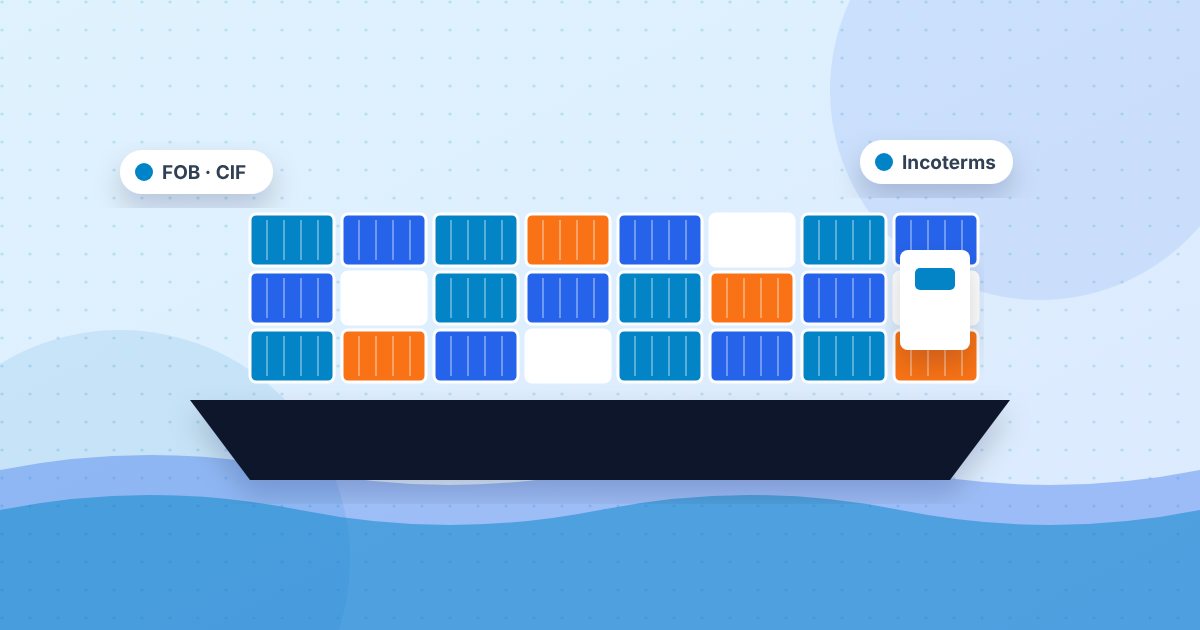
Incoterms decide who pays for what and who carries the risk while your equipment is moving. Here is what EXW, FCA, FOB, CIF and DAP mean for energy buyers.
In this article
What are Incoterms and why do they matter?
Incoterms are standard trade terms published by the International Chamber of Commerce. They define where the seller's responsibility ends and the buyer's begins: who arranges and pays for transport and insurance, who handles export and import clearance, and where the risk passes. Two quotes for the same equipment are only comparable if they use the same Incoterm.
The terms you will see most
| Term | What it means in short |
|---|---|
| EXW (Ex Works) | The goods are ready at the seller's premises. The buyer arranges almost everything from there. |
| FCA (Free Carrier) | The seller delivers the goods, cleared for export, to the carrier named by the buyer. |
| FOB (Free On Board) | For sea freight. The seller loads the goods on the ship at the named port. The buyer pays the main freight. |
| CIF (Cost, Insurance and Freight) | For sea freight. The seller pays freight and minimum insurance to the destination port. Risk passes earlier, when the goods are loaded. |
| DAP (Delivered at Place) | The seller delivers to the named place, ready for unloading. The buyer handles import clearance and duties. |
| DDP (Delivered Duty Paid) | The seller delivers to the named place and also pays import clearance and duties. This is the most work for the seller. |
How they change your landed cost
With EXW, your price is low but you add inland freight, export clearance, ocean freight, insurance, import duties and delivery. With DAP, more of that sits inside the price. Neither is better by default: the right term depends on your experience and on who can get the best freight rate. Always convert offers to a landed cost, as shown in how to compare equipment prices.
Which term for which situation?
- Experienced importer with a freight forwarder: FOB or FCA gives control over freight and insurance.
- First import: CIF or DAP puts more of the logistics on the seller, though you still need to clear customs. See importing energy equipment into Canada.
- Domestic purchases: a delivered price or pickup at the seller's warehouse is typical.
Practical tips
- Write the term with the named place and the version, for example 'FOB Shanghai, Incoterms 2020'.
- Use sea-only terms (FOB, CIF) for non-containerised sea freight, and FCA or CIP-type terms for containers, as recommended by the ICC.
- Check who insures the goods and for how much.
- Confirm who prepares the export and import documents.
- Put the term in the contract and on the invoice.
Specify it in your RFQ
When you ask for quotes, say which Incoterm you want. On TradYard the RFQ form includes an Incoterm and a delivery port. If you need help pricing the transport, you can also request a freight quote. Our guide on writing an RFQ shows where it fits.
Frequently Asked Questions
What is the difference between FOB and CIF?
With FOB the buyer pays the main sea freight and insurance. With CIF the seller pays freight and minimum insurance to the destination port.
Is EXW a good deal?
The price is lower because the seller does less, but you take on the freight and clearance. Compare on a landed-cost basis.
Who pays import duties under DAP?
The buyer. Under DAP the seller delivers to the place but the buyer handles import clearance and duties.
Do Incoterms cover payment terms?
No. They cover delivery, risk and costs. Payment terms are agreed separately in the contract.
Which Incoterms version should I use?
The latest version is Incoterms 2020. Always name the version in the contract.
Written by
Amir Oboudi
October 27, 2026
Related Articles
View all
HS Classification and Duties: Why the Code on Your Invoice Matters
The tariff code on your invoice sets the duty rate and decides whether a trade agreement applies. Here is why energy equipment is hard to classify, and how to avoid reassessment.
Freight Claims and Damaged Deliveries: What to Do in the First 48 Hours
A clean signature on the delivery receipt is the most expensive mistake in freight. This guide covers what to inspect, what to write, and what to do in the first 48 hours.
Importing Energy Equipment into Canada: Customs, Duties and Paperwork Basics
Importing equipment into Canada is mostly paperwork and planning. Here are the documents, classification steps and costs to expect, and why a customs broker is worth talking to early.
Stay in the Loop
Get weekly market insights, auction alerts, and expert tips delivered to your inbox.
Unsubscribe anytime. No spam.